
Parking Access and Revenue Control Systems (PARCS) The Complete 2026 Guide
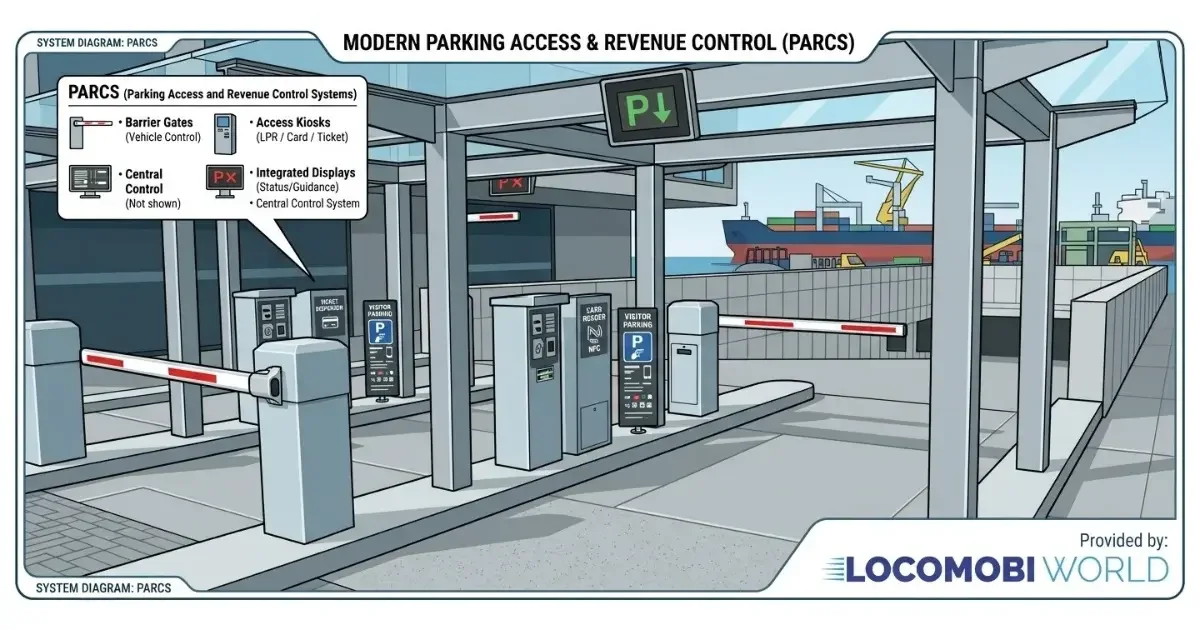
Every parking facility loses money in quiet ways. Attendants miscount cash. Drivers tailgate through open gates. Monthly permit holders share credentials. Managers wait days for reports that should take seconds. Parking access and revenue control systems (PARCS) fix these problems by combining vehicle access control, payment processing, and live reporting in one connected platform.
This guide explains what a PARCS does, which components it includes, and how to choose the right one for your facility. You will also learn which mistakes to avoid before you invest.
Key Takeaways
A parking access and revenue control system controls who enters your facility and collects every dollar they owe.
Modern PARCS platforms replace tickets and manual cash handling with license plate recognition (LPR), smart gates, pay stations, and mobile payments.
Cloud-based management lets operators change rates, review reports, and monitor lanes from anywhere.
The best system matches your user mix: monthly permit holders, hourly visitors, or both.
A phased rollout cuts risk and lets you grow the system as your facility grows.
What Are Parking Access and Revenue Control Systems?
A parking access and revenue control system is an integrated set of hardware and software that manages vehicle entry, vehicle exit, and payment collection at a parking facility. Operators often call it a PARCS.
The system has two jobs:
Access control: It identifies each vehicle, checks permissions, and opens the gate for authorized drivers only.
Revenue control: It calculates fees, accepts payments, validates tickets, and records every transaction.
Older parking setups handle these jobs separately, so data lives in different places and errors slip through the gaps. A PARCS unites both jobs. Every entry, payment, and exit lands in one record, which gives you a clear audit trail and a reliable view of your income.
How a PARCS Works, Step by Step
A typical transaction takes seconds, and the driver rarely notices the technology behind it.
The vehicle arrives: A camera or reader identifies the vehicle at the entry lane. An LPR camera reads the license plate. A ticket machine prints a ticket, or a mobile app connects over Bluetooth.
The system verifies access: The lane controller checks the credential against your permit database and your rules.
The gate opens: If the credential qualifies, the gate lifts and the system logs the entry time.
The driver parks: Your system tracks occupancy and updates your reports in real time.
The driver pays: The driver pays at a pay station, in the lane, through a mobile app, or automatically through a stored account. A merchant validator can reduce or waive the fee when a business validates the visit.
The driver exits: The system confirms payment, matches the plate or ticket, and opens the exit gate.
The cloud updates: The system syncs every transaction to your management portal, so you can review revenue, occupancy, and exceptions right away.
Core Components of a Parking Access and Revenue Control System
Each component plays a specific role. Understanding them helps you ask vendors the right questions.
License Plate Recognition (LPR) Cameras
LPR cameras read each vehicle's plate at entry and exit. They remove the need for tickets and hang tags, speed up traffic flow, and give you a photo record of every vehicle. LocoMobi World's EyePark and EyePark2 LPR cameras scan plates in seconds and upload data to the cloud in real time.
Lane Controllers
The lane controller acts as the brain of each lane. It processes camera data, checks credentials, and tells the gate when to open. A powerful controller can manage several lanes at once and keep working during network interruptions. The Dynamic Intelligent Lane Controller (D-ILC) from LocoMobi World runs on a quad-core processor with more than 1TB of expandable storage.
Smart Parking Gates
The gate controls the physical flow of vehicles. Modern smart gates install quickly, open fast, and include safety features that protect drivers and vehicles. The BriskPark Smart Gate suits both parking and toll applications because it is durable, slim, and lightweight. If you already own barriers, a retrofit kit such as GateKit adds Bluetooth-based entry and exit to your existing equipment.
Entry Kiosks and Ticket Machines
Some facilities still need tickets, especially those with a large transient audience. Pay-in-lane and pay-on-foot machines give drivers a familiar option while the system keeps tracking every transaction.
Pay Stations and Meters
Pay stations accept credit and debit payments by tap, chip, or PIN. Many models also take bills and coins. They work for gated lots, non-gated lots, and on-street parking. Solar-powered meters extend payment options to locations without a power connection.
Merchant Validators
Validators let retailers, restaurants, and clinics pay for or discount their customers' parking. Public-facing validators let customers scan their own tickets. Management-facing validators let a concierge or attendant do the scanning.
Mobile Payment Apps
Mobile apps let drivers pay from their phones and skip the pay station entirely. Paired with Bluetooth gate technology, an app can raise the gate and complete the transaction automatically.
Cloud Management Software and Onsite Servers
The management portal ties everything together. Operators change rates, create permits, run reports, and monitor lanes from any device. An onsite server, such as the WorldStream Onsite Server, synchronizes your equipment, data, and configuration with the cloud portal so you control every lane from anywhere in the world.
Access Control vs Revenue Control What Is the Difference?
Many buyers wonder whether they need access control, revenue control, or both. This table shows how the two functions compare.
|
Feature |
Access Control |
Revenue Control |
|
Main goal |
Restrict entry to authorized vehicles |
Collect and track parking fees |
|
Key hardware |
Gates, LPR cameras, readers |
Pay stations, kiosks, validators |
|
Typical users |
Tenants, employees, permit holders |
Visitors, shoppers, hourly parkers |
|
Main output |
Entry and exit logs |
Transaction and revenue reports |
|
Best for |
Private and restricted lots |
Public and paid facilities |
If your facility serves both permit holders and paying visitors, a combined PARCS gives you the strongest results.
Benefits of a Parking Access and Revenue Control System
Stronger Revenue Protection
A PARCS records every vehicle and every payment. Cash skimming, ticket fraud, and unpaid exits drop sharply because the system leaves no gap for people to exploit.
Faster Entry and Exit
LPR and mobile payments let drivers move through lanes without stopping to fumble with tickets. Shorter queues reduce frustration and keep traffic off the street.
Better Security
The system logs every vehicle that enters your facility, so your team can investigate incidents quickly. Controlled gates also stop unauthorized vehicles and discourage tailgating.
Lower Labor Costs
Automated lanes need fewer attendants. Your staff can then focus on customer service and facility upkeep instead of cash handling.
Smarter Decisions Through Data
Live dashboards show occupancy, peak hours, average stay time, and revenue by lane. You can set dynamic rates, adjust staffing, and plan expansions with real numbers instead of guesses.
A Better Customer Experience
Drivers want fast, simple, contactless parking. Multiple payment methods and ticketless entry meet that expectation and bring customers back.
Cloud-Based vs. On-Premise PARCS
On-premise systems keep data on local servers and require on-site visits for most changes. Cloud-based systems store data online, push updates automatically, and let you manage multiple locations from one dashboard.
Cloud platforms also scale more easily. You can add lanes, locations, or payment options without rebuilding your system. To see how this approach works in detail, read our guide to the cloud-based parking access control system.
How to Choose the Right Parking Access and Revenue Control System
Use this checklist to compare vendors and find the best fit.
Define your user mix: Count your monthly permit holders, hourly visitors, and validated parkers. Each group needs different tools.
Map your lanes and traffic: Busy facilities need fast LPR and multi-lane controllers. Smaller lots can start with simpler setups.
List your payment needs: Decide whether you want pay-in-lane, pay-on-foot, mobile, tap-to-pay, or cash options.
Check your existing equipment: Ask whether the vendor can retrofit your current gates before you replace them.
Confirm cloud capabilities: Look for remote management, real-time reporting, and automatic software updates.
Test integration: Make sure the system connects with your security cameras, accounting software, and permit tools.
Plan for growth: Choose a platform that lets you add lanes, locations, and features later.
Evaluate support: Pick a partner who offers installation, training, and responsive technical help.
Common Mistakes to Avoid
Buying hardware before defining goals: Start with your revenue and security targets, then choose equipment.
Ignoring visitor experience: A system that frustrates drivers hurts your revenue and your reputation.
Skipping integration planning: Disconnected tools recreate the same data gaps a PARCS should close.
Overlooking scalability: A system that fits today but blocks tomorrow's growth costs you twice.
Neglecting staff training: Your team gets the most from the system when they understand every feature.
Who Needs a Parking Access and Revenue Control System?
Any facility that controls entry or collects fees can benefit. Common examples include:
Commercial parking garages and surface lots
Airports and transportation hubs
Hospitals and medical campuses
Universities and schools
Shopping centers and mixed-use developments
Hotels and entertainment venues
Office buildings and residential communities
Municipal lots and on-street parking zones
Ready to Upgrade Your Parking Operations?
LocoMobi World designs complete parking access and revenue control solutions, from LPR cameras and smart gates to pay stations and cloud management. Explore our full parking access and revenue control lineup, then schedule a free discovery call with our team. We will review your facility, recommend the right equipment, and map out a rollout that fits your budget.
Book Your Free Discovery Call Today
Frequently Asked Questions
What does PARCS stand for?
PARCS stands for Parking Access and Revenue Control System. It describes the combined hardware and software that manages vehicle entry, exit, and payment at a parking facility.
How does a parking revenue control system reduce losses?
It records every entry, payment, and exit automatically. Because the system removes manual cash handling and flags unpaid or mismatched transactions, it closes the gaps where revenue usually disappears.
What is the difference between a parking access control system and a PARCS?
A parking access control system focuses on who may enter. A PARCS adds payment processing and revenue reporting, so it manages both entry and income.
Can I keep my existing gates?
Often, yes. Retrofit solutions such as Bluetooth gate kits plug into existing barriers, so you can modernize your system without replacing every piece of equipment.
Is license plate recognition necessary?
No, but it helps. LPR removes tickets and credentials from the process, speeds up lanes, and creates a visual record of every vehicle. Many facilities pair LPR with pay stations and mobile payments.
What payment methods can a modern PARCS accept?
Most systems accept credit and debit cards (tap, chip, and PIN), mobile app payments, and validated tickets. Many also accept cash through bill and coin options on select pay stations.
How long does installation take?
Timelines depend on the number of lanes, the condition of your current equipment, and your integration needs. A vendor can give you an accurate schedule after a site review.
Should I choose a cloud-based PARCS?
For most facilities, yes. Cloud-based platforms give you remote control, live reports, and automatic updates, and they scale as your operation grows.
Final Thoughts
Parking access and revenue control systems turn a basic lot into a secure, profitable, data-driven operation. Start by understanding your users, choose components that match their needs, and pick a cloud-based platform that grows with you.
Ready to take the next step? Talk to the LocoMobi World team and discover how a modern PARCS can protect your revenue, speed up your lanes, and delight your drivers.