
How Smart Parking Management System Works, Costs & Tech
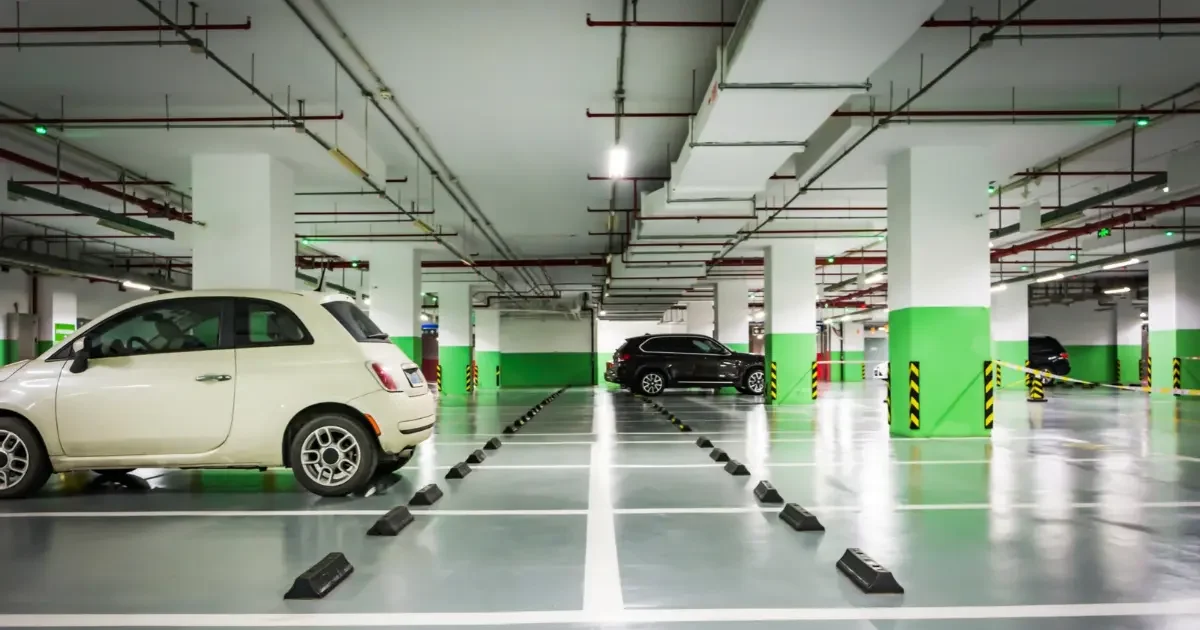
A smart parking management system combines hardware (gates, cameras, sensors) with cloud-based software to automate how vehicles enter, park, pay, and exit a property replacing manual ticketing and guesswork with real-time data and touchless access.
That's the short version. If you're evaluating a system for a condo, commercial building, municipality, or stadium, the real questions are how does it actually work, what does it cost, and which technology, license plate recognition or sensors is right for your property. This guide answers all three, based on how these systems are actually built and deployed, not just the theory behind them.
Key Takeaways
A smart parking management system has three core parts: detection hardware (LPR cameras or sensors), access/payment hardware (gates, kiosks), and a cloud platform that ties it together and gives operators real-time control.
License plate recognition (LPR) and physical sensors solve the same problem knowing where vehicles are but differ sharply in cost, install complexity, and what they enable (LPR doubles as your access credential; sensors need a separate access layer).
Real deployments cost anywhere from a few hundred to over a thousand dollars per space depending on technology, property size, and whether it's new construction or retrofit.
The biggest adoption barriers aren't technical they're upfront cost, data privacy compliance, and getting hardware from different vendors to talk to one platform.
Properties seeing the fastest payback are usually high-turnover ones (condos with guest parking, commercial buildings, stadiums) where automation removes the most labor and leakage.
What Is a Smart Parking Management System?
At its core, a smart parking management system is a way to run a parking facility without a person physically managing every entry, exit, and payment. Instead of a human attendant checking tickets or a driver hunting for a space, the system handles three jobs automatically:
Detects whether a vehicle or space is where it should be (via cameras or sensors)
Controls access (opening a gate, validating a permit, flagging an unauthorized vehicle)
Manages the transaction (charging a resident, billing a visitor, tracking a monthly permit)
All of this data flows into a cloud dashboard, which is where the "smart" part earns its name property managers can see occupancy, revenue, and violations in real time from a browser or phone, instead of walking the lot or reviewing a stack of paper tickets.
This is different from a basic automated gate system, which might dispense tickets and open a barrier but has no intelligence layer connecting the equipment, tracking usage patterns, or letting an operator manage the property remotely.
How a Smart Parking System Actually Works
Strip away the marketing language and every smart parking deployment is built from the same three layers:
1. Detection layer
This is how the system knows a vehicle is present. There are two main approaches, and the choice between them shapes almost everything else about the deployment:
License plate recognition (LPR): Cameras at entry/exit points read plates and match them against a pre-authorized list. The plate itself becomes the access credential, no fob, ticket, or app tap required.
Physical sensors: Magnetic, ultrasonic, or inductive-loop sensors embedded in or above individual spaces detect occupancy space-by-space, which is useful for space-level guidance but doesn't by itself control access.
2. Access and payment layer
This is the physical equipment, gates, barrier arms, pay-on-foot stations, pay-at-exit terminals plus the payment mechanism. Modern systems increasingly skip the ticket entirely: a driver's plate or a mobile app handles both access and billing, so there's no card to lose and no line to sit in.
3. Cloud management platform
Everything reports back to a central cloud system. This is where property managers set rates, issue permits, review activity logs, handle exceptions (a resident whose plate didn't scan correctly), and pull reports for owners or municipalities. A good platform also lets different hardware gates from one vendor, cameras from another operate under a single interface, which is one of the harder integration problems in this space.
LPR vs Sensor-Based Detection Which Is Better?
This is the decision most properties actually get stuck on, and the honest answer is it depends on what problem you're solving. Here's how they compare:
LPR (License Plate Recognition)
Sensor-Based (magnetic/ultrasonic/loop)
What it detects
Vehicle identity at entry/exit points
Occupancy of individual spaces
Doubles as access control?
Yes the plate is the credential
No needs a separate gate/access system
Best for
Gated properties, condos, commercial buildings, enforcement
Open lots, space-level wayfinding, large public garages
Install complexity
Camera at chokepoints; no per-space wiring
Sensor per space; more units to install and maintain
Ongoing accuracy factors
Lighting, plate condition, camera angle
Battery life (wireless sensors), interference
Typical use case
"Who's allowed in and did they pay"
"Which of these 500 spaces are open right now"
Many larger facilities end up using both: LPR at the gates for access and enforcement, sensors inside for real-time space guidance. Smaller gated properties — condos, private commercial lots often get everything they need from LPR alone, since access control is the primary problem and space-by-space guidance matters less when the lot is smaller.
Real-World Applications by Property Type
Condominiums and residential buildings Guest parking is the biggest pain point residents want an easy way to authorize visitors without calling the front desk, and property managers want to stop chronic guest-spot abuse. LPR-based systems let residents register a guest's plate remotely, with the gate handling verification automatically. Revenue-control features also let unused resident spots be monetized as pay-per-use guest parking without adding staff.
Commercial and office buildings Tenant access, visitor management, and monthly permit billing all need to run without a dedicated attendant. A cloud platform lets a single remote team manage access across multiple properties instead of staffing each one individually.
Municipalities Enforcement is the core use case LPR lets a single vehicle patrol scan an entire block of parked cars in minutes, cross-referencing against permits and violations far faster than manual chalk-marking. Dynamic, demand-based pricing (raising rates in high-demand zones at peak times) is also increasingly common in municipal deployments.
Stadiums and event venues The challenge here is volume compressed into a short window thousands of vehicles arriving and leaving within an hour or two of an event. Systems built for this need to handle high-throughput access, pre-paid/reserved parking, and staff/vendor credentialing separately from general admission, all without creating gridlock at the gates.
Construction and temporary sites Shorter-term deployments need equipment that doesn't require permanent infrastructure changes this is where flexible, quickly-installed hardware matters more than deep integration.
Benefits of a Smart Parking Management System
Lower labor costs: fewer staff needed for ticketing, enforcement, and manual reconciliation
Reduced revenue leakage: automated billing catches what manual ticket-checking misses
Faster throughput: no stopping to take a ticket or swipe a card means less queuing at entries and exits
Remote management: operators can run a property (or a portfolio of properties) from a single dashboard instead of being on-site
Better data: occupancy trends, peak times, and violation patterns become visible instead of anecdotal
Improved security: automatic flagging of unauthorized vehicles and a full access log for every entry and exit
What It Costs and Where the Money Goes
Costs vary widely based on technology choice, property size, and whether you're retrofitting existing infrastructure or building new. As a rough guide:
Sensor-based systems tend to run higher per space when you need full-lot coverage commonly cited industry figures put per-space sensor costs at $1,000+ once installation and gateway infrastructure are included.
LPR-based systems concentrate cost at entry/exit chokepoints rather than per space, which often makes them more cost-effective for gated properties where you're controlling a handful of access points rather than hundreds of individual spaces.
Cloud platform fees are typically ongoing (subscription-based) rather than one-time, covering software updates, remote monitoring, and support.
The properties that see the fastest payback are usually high-turnover, high-volume sites commercial buildings, condos with active guest parking, stadiums where the labor and leakage being eliminated is substantial relative to the install cost. Low-turnover, small private lots see a longer payback window and should weigh whether a simpler access-control setup makes more sense before jumping to a full sensor deployment.
Common Challenges (and How They're Actually Solved)
Upfront cost. This is the most cited barrier, and it's real but it's increasingly addressed through phased rollouts (start with entry/exit LPR, add sensors later) or revenue-share/no-capex models where a provider installs equipment and takes a cut of the parking revenue it generates.
Data privacy. LPR and camera systems collect data tied to real vehicles and, indirectly, real people. Reputable providers address this with defined data retention policies, encrypted storage, and compliance with regional privacy regulations this is a question worth asking directly of any vendor.
Vendor fragmentation. Gates from one manufacturer, cameras from another, payment processing from a third getting them to work as one system is historically one of the harder parts of a deployment. This is largely why cloud platforms built to integrate multiple hardware types (rather than a single-vendor closed system) have become the standard approach.
Accuracy in edge cases. Poor lighting, damaged or obscured plates, and sensor interference can all cause misreads. Systems with a human-in-the-loop exception queue (flagging uncertain reads for quick manual review rather than blocking access outright) handle this better than fully automated systems with no fallback.
Choosing the Right System for Your Property
The right setup depends less on which technology is "best" in the abstract and more on what problem your property actually has. A condo bleeding revenue on guest parking abuse needs different tools than a stadium trying to clear 5,000 cars in 20 minutes, and both need something different from a municipality enforcing permits across city blocks.
The properties that get the most value are the ones that start with the actual bottleneck access control, space visibility, payment leakage, enforcement and build from there, rather than buying the most feature-complete system available.
Ready to Modernize Your Parking Operations?
LocoMobi World brings LPR access control, mobile payment, and cloud-based management together into one system built for real properties not just a concept. BriskPark hardware and the WorldStream cloud platform integrate seamlessly with PassagePass (touchless mobile payment) and LPR Express (license plate recognition), giving condos, commercial buildings, municipalities, and stadiums a single dashboard to run everything from.
Whether you're replacing outdated ticket-and-gate equipment or building a parking strategy from scratch, our team can walk you through what actually fits your property no generic pitch, just a straight answer based on your traffic patterns, budget, and goals.
Talk to a LocoMobi World Parking Expert